Description
What is the role of emotions in politics?
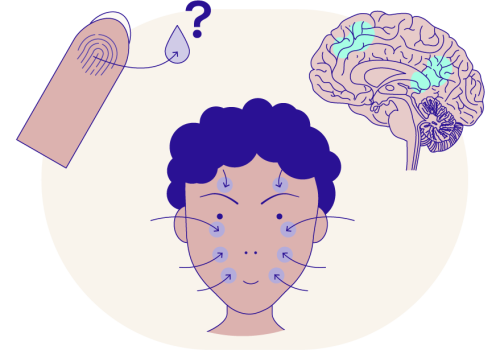
Emotions emerge in politics in various ways: as part of how politicians communicate, as a response to politics, as part of a political identity or mental health, and as cause of particular forms of political behavior.
In the Hot Politics Lab we investigate these different topics. We use different methods and approaches for this. For example, we use computational approaches to investigate emotional appeals in speeches of politicians and neurophysiological measures to investigate bodily responses to politics.
In addition to this we also work more theoretically on defining and describing the emotions people have in the domain of politics, and how this relates to broader theories of affect.
Publications
| No | Publication |
|---|---|
| 1 | Gustavo Couto de Jesus, Bert N. Bakker, Gijs Schumacher, Joe Bathelt (2026). The Temporal Sequence of Party Leader Incongruence: a data-driven ERP study Preprint |
| 5 | Gustavo Couto de Jesus, Maaike D. Homan, Diamantis Petropoulos Petalas, Bert N.Bakker, Joe Bathelt, and Gijs Schumacher (2025). An ERP-study on the extent to which partisanship conditions the early processing of politicians’ faces. Social Neuroscience |
| 6 | Isabella Rebasso, Matthijs Rooduijn & Gijs Schumacher (2025). The limits of appraisal theory for political emotions: Evidence from two U.S. surveys Political Psychology |
| 10 | Delaney Peterson, Matthijs Rooduijn, Frederic R. Hopp, Gijs Schumacher & Bert N. Bakker (2025). Loneliness is positively associated with populist radical right support. Social Science & Medicine |
| 11 | Christian Pipal, Martijn Schoonvelde, Gijs Schumacher & Max Boiten (2025). JST and rJST: joint estimation of sentiment and topics in textual data using a semi-supervised approach. Communication Methods and Measures |
| 13 | Diamantis Petropoulos Petalas, Gijs Schumacher & H. Steven Scholte (2025). Is Political Ideology Correlated with Brain Structure? A Preregistered Replication. iScience |
| 14 | Linda C. Bomm, Gijs Schumacher, Frederic Hopp & Bert N. Bakker (2026). The Structure and Correlates of Societal Threat Perceptions: A Network Approach. Social Psychological Bulletin |
| 18 | Nikki P. Dekker, Bert N. Bakker, Anke Munniksma, Remmert J. M. Daas, & Han L. J. van der Maas (2025). Literatuurstudie: de opvattingen van jongeren over lhbtiq+-personen Rijksoverheid |
| 19 | Malte Luken, Kody Moodley, Eva Viviani, Christian Pipal, Gijs Schumacher (2024). MEXCA - A Simple and Robust Pipeline for Capturing Emotion Expressions in Faces, Vocalization, and Speech. Preprint |
| 23 | Christian Pipal, Bert N. Bakker, Gijs Schumacher & Mariken A. C. G. van der Velden (2024). Tone in politics is not systematically related to macro trends, ideology, or experience. Scientific Reports |
| 24 | Gijs Schumacher, Maaike D. Homan, Isabella Rebasso, Neil Fasching, Bert N. Bakker & Matthijs Rooduijn (2024). Establishing the validity and robustness of facial electromyography measures for political science. Politics and the Life Sciences |
| 25 | Maaike D. Homan, Gijs Schumacher & Bert N. Bakker (2024). Facing emotional politicians: Do emotional displays of politicians evoke mimicry and emotional contagion? Emotion |
| 26 | Bert N. Bakker, & Yphtach Lelkes (2024). Putting the affect in affective polarization. Cognition & Emotion |
| 29 | Roeland Dubel, Maaike D. Homan, Delaney Peterson, Gijs Schumacher & Bert N. Bakker (2024). Replicating and extending Soroka, Fournier & Nir (2019): negative news increases arousal and negative affect. Media & Communication. |
| 33 | Maaike D. Homan (2024). Citizens’ affective, cognitive and behavioral responses to the emotional displays of politicians. PhD dissertation |
| 34 | Christian Pipal (2024). Blueprints and fingerprints Politicians' use of emotional appeals in European democracies. PhD dissertation |
| 35 | Homan, M. D., Hamdan, M., Hendriks, K., & Petropoulus Petalas, D. (2024). Neural Responses to Emotional Displays by Politicians: Differential Mu and Alpha Suppression Patterns in Response to In-Party and Out-Party Leaders. Scientific Reports |
| 36 | Mazepus, H., Osmudsen, M., Bang-Petersen, M., Toshkov, D., & Dimitrova, A. (2023). Information battleground: Conflict perceptions motivate the belief in and sharing of misinformation about the adversary. PLOS ONE |
| 41 | Christian Pipal, Hyunjin Song, Hajo G Boomgaarden (2023). If you have choices, why not choose (and share) all of them? A multiverse approach to understanding news engagement on social media. Digital Journalism |
| 44 | Ariel Malka, Yphtach Lelkes, Bert N. Bakker, and Eliyahu Spivack (2022). Who is open to authoritarian governance in western democracies. Perspectives on Politics |
| 66 | Maaike Homan (2020). Alexander Todorov's Face Value: The Irresistible Influence of First Impressions. Politics and Life Sciences |
| 67 | Bert N. Bakker, Gijs Schumacher & Maaike Homan (2020). Yikes. Are we disgusted by politicians? Politics and Life Sciences |
| 68 | Bert N. Bakker, Yphtach Lelkes & Ariel Malka (2020). Understanding partisan cue receptivity: Tests from predictions from the bounded rationality and expressive utility perspectives. The Journal of Politics |