Description
What is the role of emotions in politics?
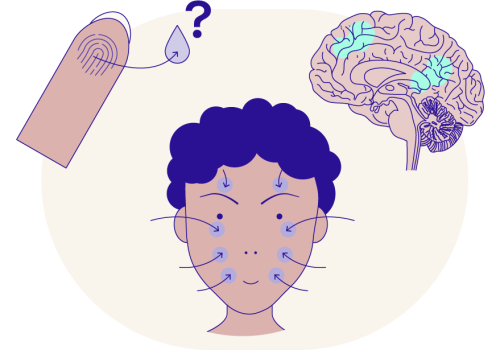
Emotions emerge in politics in various ways: as part of how politicians communicate, as a response to politics, as part of a political identity or mental health, and as cause of particular forms of political behavior.
In the Hot Politics Lab we investigate these different topics. We use different methods and approaches for this. For example, we use computational approaches to investigate emotional appeals in speeches of politicians and neurophysiological measures to investigate bodily responses to politics.
In addition to this we also work more theoretically on defining and describing the emotions people have in the domain of politics, and how this relates to broader theories of affect.
Publications
| Nr. | Citation |
| 1 | Linda C. Bomm, Paul K. Bergmann, Bert N. Bakker (2025). Threat and Worry, but not Issue Salience, Show Similar Patterns in Means, Correlations, and Ideological Associations Preprint |
| 2 | Isabella Rebasso, Matthijs Rooduijn & Gijs Schumacher (2025). Appraisal Theory Predicts Emotions in the General, but Not in the Political Domain. Preprint |
| 3 | Christian Pipal, Martijn Schoonvelde, Gijs Schumacher & Max Boiten (2025). JST and rJST: joint estimation of sentiment and topics in textual data using a semi-supervised approach. Communication Methods and Measures |
| 4 | Jakob Kasper, Gijs Schumacher & Bert N. Bakker (2025). Establishing the Construct and Predictive Validity of Brief Measures of Affective Polarization. European Journal of Political Research |
| 5 | Linda C. Bomm, Gijs Schumacher, Frederic Hopp & Bert N. Bakker (2025). The Structure and Correlates of Societal Threat Perceptions: A Network Approach. Preprint |
| 6 | Ranganatha, N., Komáromy, D., & Rooduijn, M. (2025). Populism and Affective Polarization Handbook of Affective Polarization |
| 7 | Malte Luken, Kody Moodley, Eva Viviani, Christian Pipal, Gijs Schumacher (2024). MEXCA – A Simple and Robust Pipeline for Capturing Emotion Expressions in Faces, Vocalization, and Speech. Preprint |
| 8 | Maaike D. Homan & Gijs Schumacher (2024). Examining the Influence of Politicians’ Emotional Appeals on Vote Choice using a Visualized Leader Choice Task. Preprint |
| 9 | Christian Pipal, Bert N. Bakker, Gijs Schumacher & Mariken A. C. G. van der Velden (2024). Tone in politics is not systematically related to macro trends, ideology, or experience. Scientific Reports |
| 10 | Gijs Schumacher, Maaike D. Homan, Isabella Rebasso, Neil Fasching, Bert N. Bakker & Matthijs Rooduijn (2024). Establishing the validity and robustness of facial electromyography measures for political science. Politics and the Life Sciences |
| 11 | Maaike D. Homan, Gijs Schumacher & Bert N. Bakker (2024). Facing emotional politicians: Do emotional displays of politicians evoke mimicry and emotional contagion? Emotion |
| 12 | Bert N. Bakker, & Yphtach Lelkes (2024). Putting the affect in affective polarization. Cognition & Emotion |
| 13 | Roeland Dubel, Maaike D. Homan, Delaney Peterson, Gijs Schumacher & Bert N. Bakker (2024). Replicating and extending Soroka, Fournier & Nir (2019): negative news increases arousal and negative affect. Media & Communication. |
| 14 | Maaike D. Homan (2024). Citizens’ affective, cognitive and behavioral responses to the emotional displays of politicians. PhD dissertation |
| 15 | Christian Pipal (2024). Blueprints and fingerprints Politicians’ use of emotional appeals in European democracies. PhD dissertation |
| 16 | Homan, M. D., Hamdan, M., Hendriks, K., & Petropoulus Petalas, D. (2024). Neural Responses to Emotional Displays by Politicians: Differential Mu and Alpha Suppression Patterns in Response to In-Party and Out-Party Leaders. Scientific Reports |
| 17 | Komáromy, D., Rooduijn, M., & Schumacher, G. (2024). Mapping the populist mind: A network approach to integrate sociological and psychological models of the populist radical right Frontiers in Political Science |
| 18 | Isabella Rebasso (2023). Feeling Within Reason: How Appraisals Shape Emotional Responses to Politics. PhD dissertation |
| 19 | Mark Brandt, & Bert N. Bakker (2022). The complicated but solvable threat-politics relationship. Trends in the Cognitive Sciences |
| 20 | Bert N. Bakker, Gijs Schumacher & Matthijs Rooduijn (2020). Hot Politics? Affective responses to political rhetoric. American Political Science Review |
| 21 | Maaike Homan (2020). Alexander Todorov’s Face Value: The Irresistible Influence of First Impressions. Politics and Life Sciences |
| 22 | Bert N. Bakker, Gijs Schumacher & Maaike Homan (2020). Yikes. Are we disgusted by politicians? Politics and Life Sciences |